






Digital Workshop on Providing access to digital services for non-resident taxpayers
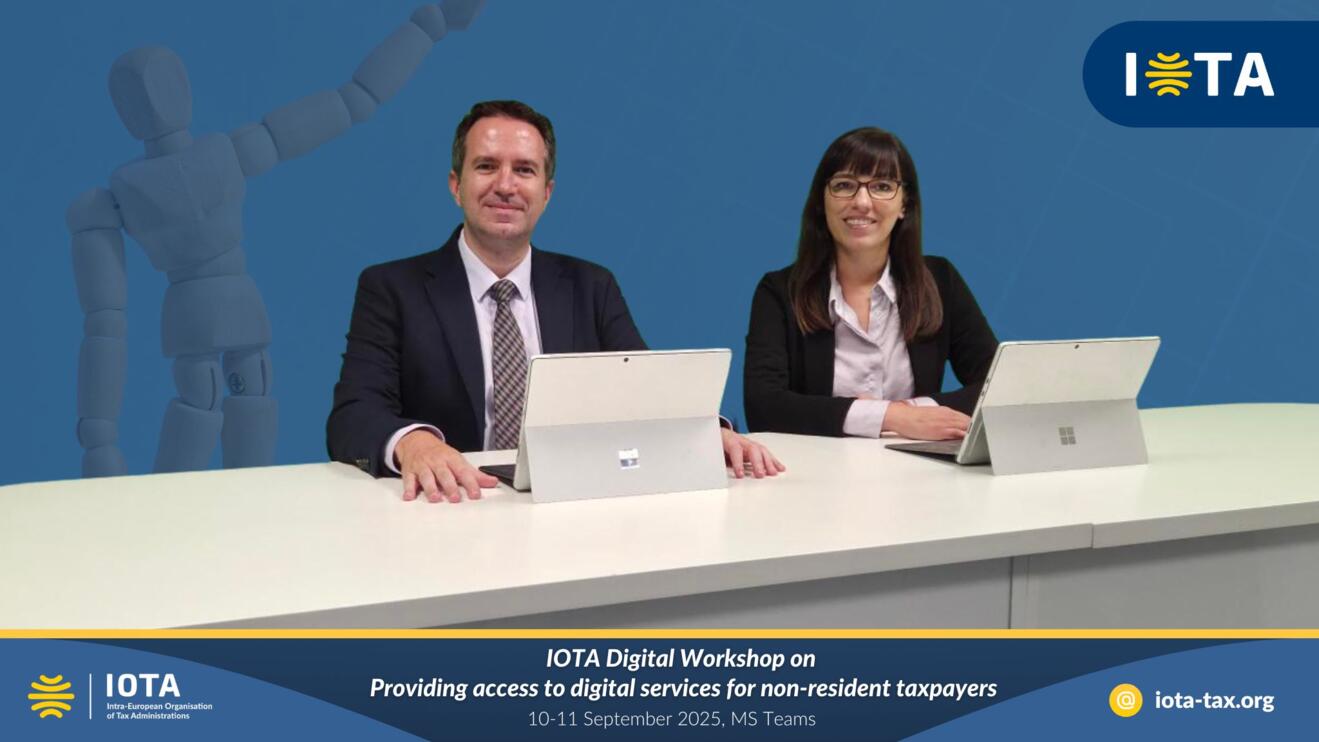
On September 10-11, 2015, IOTA kicked off the autumn season of its work programme activities with a Digital Workshop titled “Providing Access to Digital Services for Non-Resident Taxpayers.” The event featured speakers from IOTA member countries, including Georgia, Hungary, Lithuania, Norway, Romania, and Sweden, and attracted more than 130 participants from 25 IOTA member tax administrations, online. The Workshop was broadcast live via the MS Teams platform.
As the digital landscape evolves rapidly, tax administrations face the dual challenge of adopting new technologies while complying with European and international regulations. A major focus is enabling secure and efficient access to digital tax services for non-resident taxpayers—both from within and outside the EU. This involves identifying foreign taxpayers, verifying their e-identity, as well as developing and implementing procedures for the acceptance and validation of digital tax certificates. With taxpayers becoming increasingly mobile and digitally proficient, their expectations for seamless cross-border access to digital services continue to grow. This workshop was designed to explore how IOTA member tax administrations are developing and implementing solutions to identify, recognise, and provide digital service access for non-resident taxpayers. It also examined how they verify and accept digital tax certificates —key steps toward building trust and ensuring effective cross-border digital tax services.
Following opening remarks from IOTA International Experts Ivana Donchevska and Alexandros Roukalis, the first day began with an introductory plenary session hosted by Romania. In this session, Rodica Duță presented an overview of the topic, “Ensuring access to digital services for nonresident taxpayers,” and outlined the main challenges in providing such services. This was followed by a second plenary session, where two IOTA member countries shared insights and highlighted practical approaches on the topic:
- Sweden: “Coming to Sweden – lessons learned regarding employment,” presented by Johan Schauman;
- Norway: “Digital identity and non-residents,” presented by Marianne Henriksen.
Following the plenary sessions, participants split into smaller virtual breakout groups to discuss the challenges and approaches in providing various electronic services to non-resident taxpayers.
The second day emphasised country approaches to enhance access to digital services for non-residents. This session highlighted practical strategies and innovative ideas to make digital services more accessible and user-friendly for non-residents, with a presentation from Asta Butkuvienė, Lithuania: “Enhancing Accessibility of E-Services for Non-Residents: The Lithuanian Approach”. The next plenary focused on advancing the issuance and acceptance of electronic tax certificates. This session covered recent developments in issuing and cross-border recognition of electronic tax certificates, showcasing new approaches, technologies, and best practices that support more efficient, secure, and widely accepted digital certification processes. Presentations included:
- Hungary: “Issuance, verification, and acceptance of tax certificates for foreign taxpayers,” presented by Boglárka Bíró;
- Georgia: “Digital Tax Administration and Electronic Validation Procedure in Georgia,” presented by Teona Shiukashvili.
This plenary was followed by a group discussion on "Country experiences for identifying and authorising non-resident taxpayers to access digital services." Participants discussed different approaches, including dedicated platforms and authentication procedures, that facilitate secure and efficient digital access for non-residents. Moreover, some views were exchanged regarding the use of AI in the digital verification of documents, with certain precautions in its application.
The event wrapped up with feedback from the group discussions, where attendees shared main outcomes from the two days of conversations, and concluded with a panel debate on key topics related to non-resident taxpayers. The panel addressed best practices for identification and verification, digital service delivery, the unique challenges they present, and future plans for process improvements. Panelists included Johan Schauman from Sweden, Marianne Henriksen from Norway, and Fernando Alonso Monferrer from Spain.
Throughout the Workshop, each plenary session concluded with an interactive Q&A, allowing participants to ask questions and share their experiences on the topics. All materials and presentations are now available online on the event's webpage, and the video recording of the event will be made available soon on the same platform. The Workshop was facilitated by IOTA’s International Taxation Experts, Ivana Donchevska and Alexandros Roukalis.