

IOTA Executive Secretary Participates in the In-person Meeting Organised by the OECD FTA’s HR Community of Interest in cooperation with IOTA
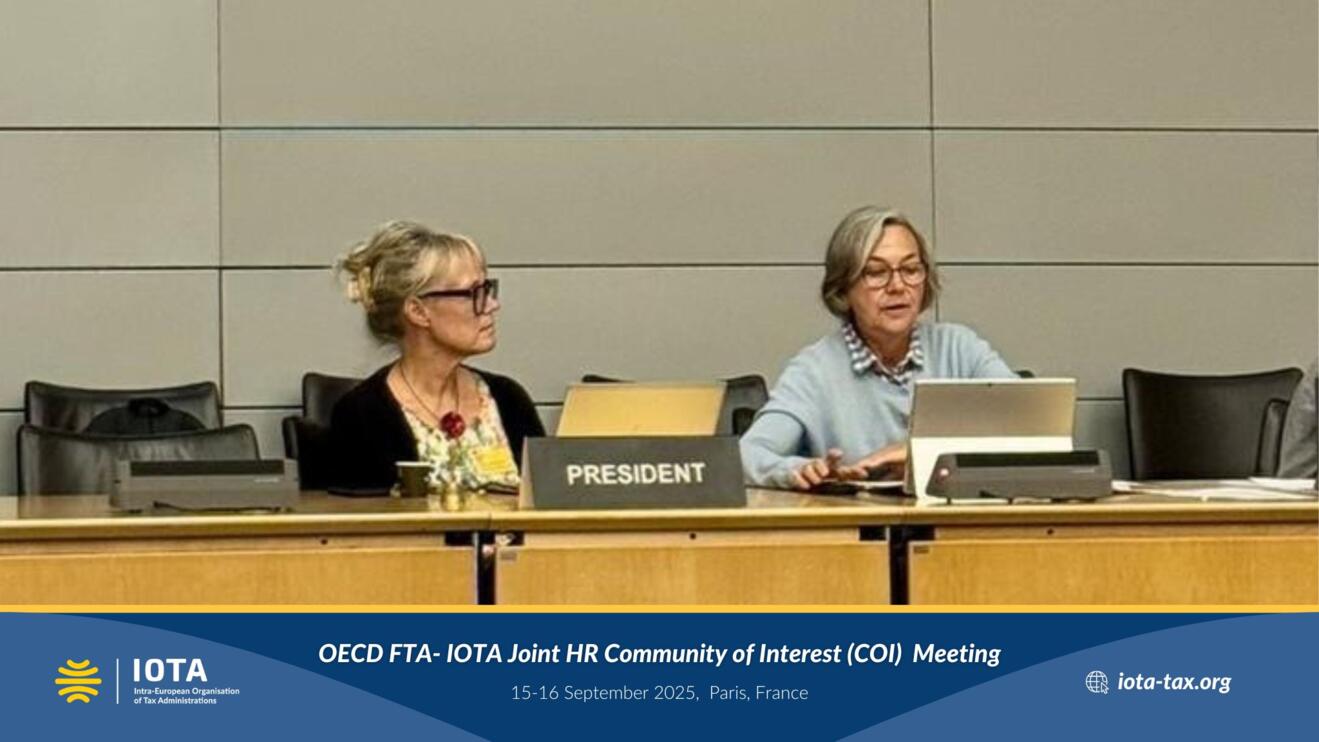
On September 15-16, 2025, Alix Perrignon de Troyes, Executive Secretary of IOTA, participated in the in-person meeting organised by the OECD FTA’s HR Community of Interest in cooperation with IOTA in Paris, France. The two-day event facilitated an engaging exchange of views and experiences among members on the evolving challenges and opportunities faced by tax administrations in HR management amid rapid technological change.
The gathering emphasised the deep impact of emerging technologies, particularly AI, on workforce skills, organisational culture, and work practices. Panel discussions highlighted that as automation and digital solutions reshape the public sector, organisations must adapt their leadership, learning, and development strategies to equip staff for future demands. The importance of fostering a culture of psychological safety, collaboration, and human-centered leadership was a recurring theme, emphasising that soft skills will become the new essential competencies.
Opening the sessions, Ulrika Lindhoff, Chair of the HR COI from Swedish Tax Agency, set the tone for a forward-looking dialogue on the future of work in tax administrations. The event featured five sessions covering topics such as the future of work, digitalisation, implications of new technologies like AI, and the role of culture and leadership as catalysts for transformation.
During the meeting, Alix Perrignon de Troyes presented IOTA’s initiatives in human resource development, focusing on the activities and services offered to its member tax administrations. She highlighted the IOTA Forum on Human Resource Management and shared recent developments in the VITARA online training platform, underscoring the organisation’s commitment to supporting HR innovation and staff development across tax administrations.
The meeting concluded with a discussion on the next steps for the HR Community of Interest, reaffirming the importance of adaptable, people-centered approaches to organisational transformation in the digital age.